Do You Know The Real (Literary) History Behind Valentine’s Day?
A Saint, a She-Wolf, Chaucer, Suffragettes, and the Strange Origins of Love’s Most Complicated Holiday
As we descend into the depths of this holiday, I’d like to pose a question:
Where did Valentine’s Day actually come from?
Was it formed in the name of greed — yet another commercial ploy — or, to quote Elton John, in the name of love?
Now, we pride ourselves on separating history from lore whenever possible. But Valentine’s Day is admittedly slippery. In 1969, the holiday was removed from the Catholic liturgical calendar because of the sheer number of conflicting legends surrounding it. Suspicious? Perhaps.
What we can trace involves: a saint, a duke, Chaucer, some wildly crafty female entrepreneurs, a hogshead or two of commercial greed, and a few unsettling rituals involving whipping, lady lotteries, and spicy Valentine’s Day cards.
Saints & Other Scandalous Beginnings
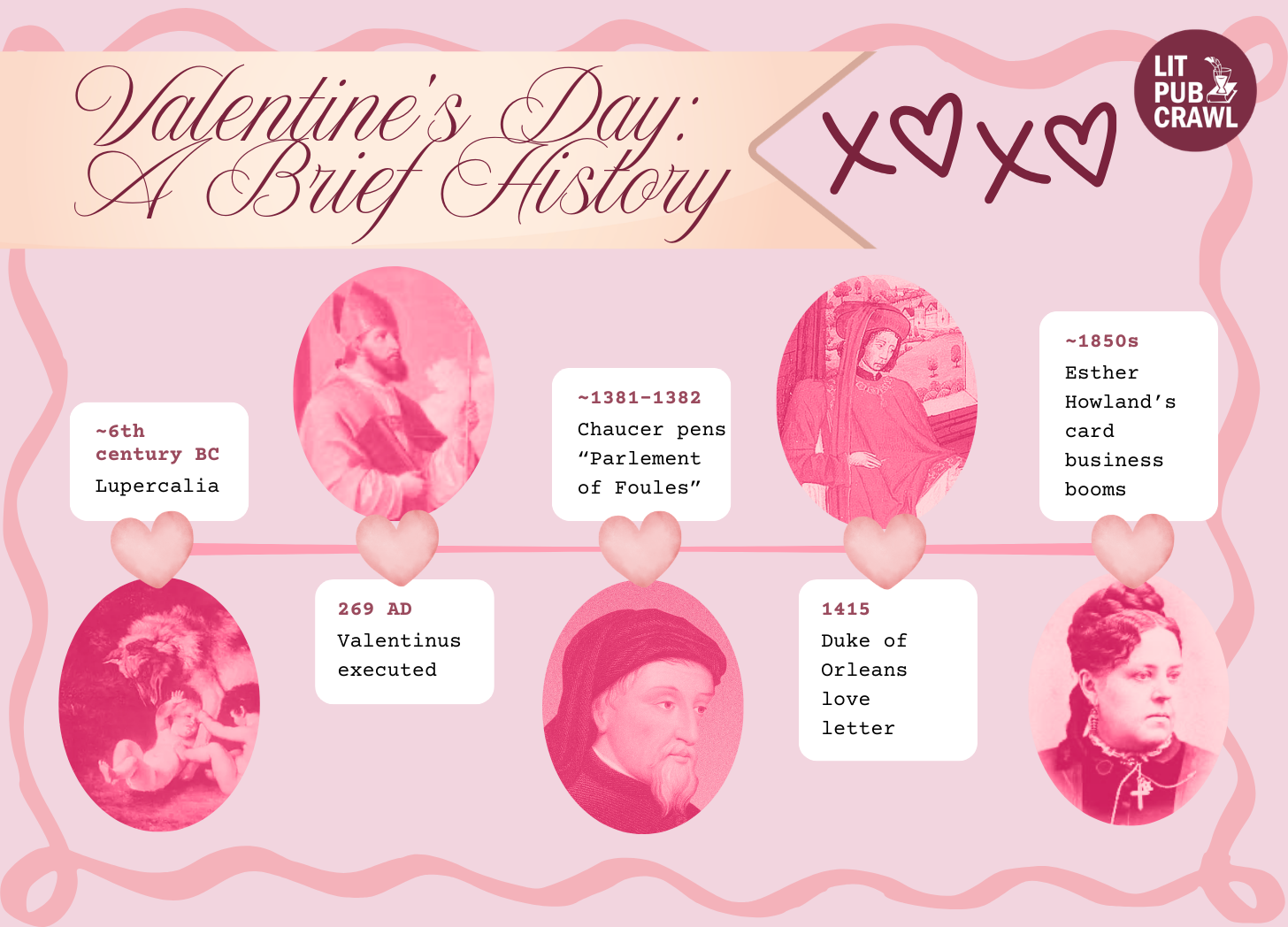
There are at least three possible Saint Valentines who could lay claim to be the namesake. But the most famous legend involves the third-century martyr Valentinus.
The story goes like this: Roman Emperor Claudius II (Claudius the Cruel, if you’re feeling dramatic) believed unmarried men made better soldiers. So he banned marriage. Total devotion to Rome, please and thank you. If the “unsullied” from Game of Thrones comes to mind, you are not far off.
Valentinus, hopeless romantic that he was (or so we presume), continued marrying hopeful youths in secret. On February 14th, 269 AD, he was executed.
Naturally, the legend improves with embellishment. While imprisoned, Valentinus is said to have either fallen in love with his jailer’s daughter or healed her blindness–take your pick! Prior to his execution, he allegedly left her a note signed:
“From your Valentine.”
Cue the violins.
The Pagans Deserved Better
In 496 AD, Pope Gelasius declared February 14th a Christian feast day — conveniently replacing the much older pagan festival of Lupercalia.
Lupercalia was… spirited.
Celebrated in Rome since antiquity, it honored fertility and the founding myth of Rome: Romulus and Remus, the abandoned twins suckled by a she-wolf (Lupa). During the festival, goats were sacrificed, men ran naked through the streets striking women with strips of hide to “purify” them and increase fertility, and (according to some reports) there were concerns about shapeshifting werewolves.
Gelasius was not amused.
Thus, one ancient ritual was banned, and another slowly took its place.
Chaucer: Love IS for the Birds
Fast forward to the late 14th century.
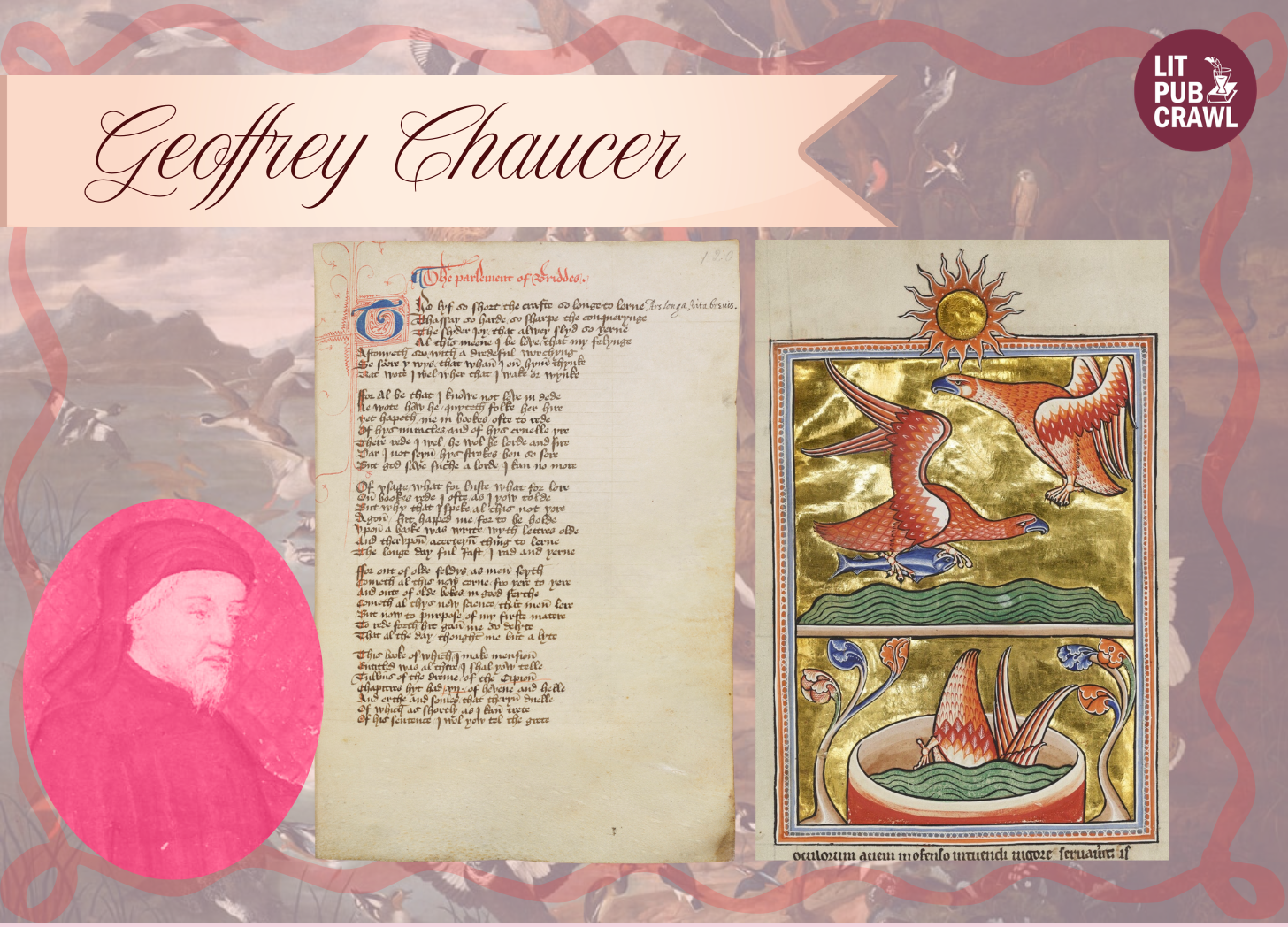
Enter Geoffrey Chaucer, medieval poet, father of English literature, lover of hot goss, and chronicler of humanity’s most enduring traits: vanity, lust, messiness.
Around 1381–82, Chaucer wrote “Parliament of Foules” (Foules being “Fowls” or birds) a poem set on February 14th — the day believed at the time to mark the beginning of birds’ mating season. In it, he explicitly refers to St. Valentine’s Day.
Many scholars argue this is the earliest literary link between the holiday and romantic love.
In other words, Chaucer may have put Valentine’s Day on the map as a lovers’ holiday.
Saint Valentine, who art full high aloft –
Thus sing the small fowls for your sake –
Now welcome summer, with your sun soft,
That this winter’s weather does off-shake.
For those of us bereft of warmer climes who must continue to endure ice and snow, I find that passage does wonders! Simply strip naked and chant this passage while dancing under a full moon. No goat sacrifice necessary.
Shakespeare, Ophelia, and a Much Less Gentle Valentine
By the late Middle Ages, we also see early Valentine “letters” emerging. In 1415, Charles d’Orléans penned a poem to his wife while imprisoned in the Tower of London, calling her his “very gentle Valentine.” We see a good deal of love riddles, shared poems, and other tokens or expressions of courtly love take over around this time, particularly following the invention of the printing press in 1440.
This same Duke and Valentine’s Day also appear (separately) in several of Shakespeare’s plays, but I would argue the holiday lurks most disturbingly in Hamlet.
In Act IV sc. v, at the height of her unraveling, Ophelia sings:
Tomorrow is Saint Valentine’s day,
All in the morning betime,
And I a maid at your window,
To be your Valentine.
Sweet? Perhaps.
But the next stanza implies that she leaves no longer a maid at all.
And throughout the play, Ophelia’s language is saturated with bird imagery, such as owls, robins, doves, and her father describes Hamlet’s vows as “springes to catch woodcocks.”
When we remember Chaucer’s association of Valentine’s Day with birds choosing their mates, and Shakespeare’s well-documented affection for Chaucer, the implication becomes difficult to ignore. Valentine’s Day was not merely sweet — it was mating season.
Suddenly, Hamlet looks less like a wounded romantic and more like a man retreating from a promise already consummated.
Before Hallmark, There Was Esther Howland
By the 19th century, exchanging handmade valentines had become quite fashionable. Enter Esther Howland, also known as The Mother of the American Valentine.
In the 1840s, after receiving an ornate English valentine, she realized Americans would gladly pay for prettier, more elaborate cards. And she was right.
She began importing lace paper, silk flowers, and colorful illustrations — often traveling solo to New York City to source materials — assembling the cards in her family home in Worcester, Massachusetts.
By the 1870s, she had built one of the first female-owned assembly-line businesses in the United States, employing local women and selling some cards for up to $50 each (the equivalent of roughly $2,000 today).
Before she sold the company, she was making what would translate to several million dollars annually in today’s terms!
Valentine’s Day, at this point, was no longer just sentiment. It was full-on industry.
Joan Lindsay and the Witchy Valentine
Let’s take a supernatural detour, shall we?
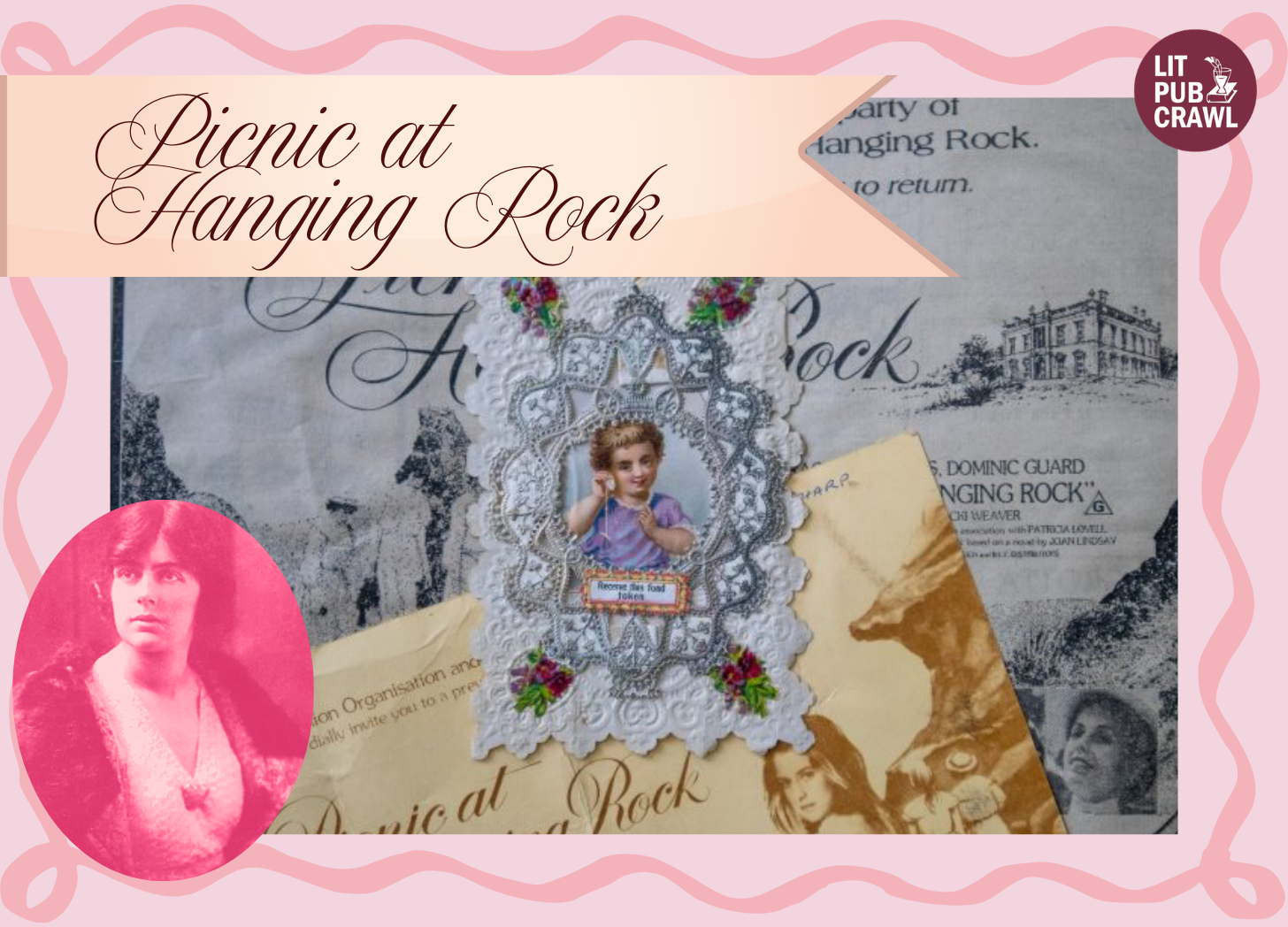
Australian author Joan Lindsay, best known for Picnic at Hanging Rock, was an avid collector of ornate Victorian Valentine’s cards. The novel famously opens on Valentine’s Day, 1900, the day a group of schoolgirls go mysteriously missing while enjoying a picnic at an ancient ceremonial site.
“She had no desire to weep. Only to love…”
Lindsay kept a Valentine album in which she carefully notated which type of card belonged to each character. The aesthetics of sentiment — lace, innocence, cherubs — became the backdrop for a story about repression, violent female restraint, and the female rage simmering beneath polite society.
After Lindsay’s death, her publish released the elusive “missing chapter,” Chapter 18, which accounts for the unseen supernatural events. Some people contest if this is really what Lindsay intended. It’s witchy. It’s strange. It’s literally corset-busting.
And it feels like a natural evolution of the holiday: beneath the lace and ribbons, something wild presses upward.
(sidebar: I have so much more to say about this book and the Victorian customs related to grooming and dressing habits – definitely let us know if you’d like to hear more on this one!)
When Valentines Became Political
Which brings us beautifully to the Suffragette Valentines.
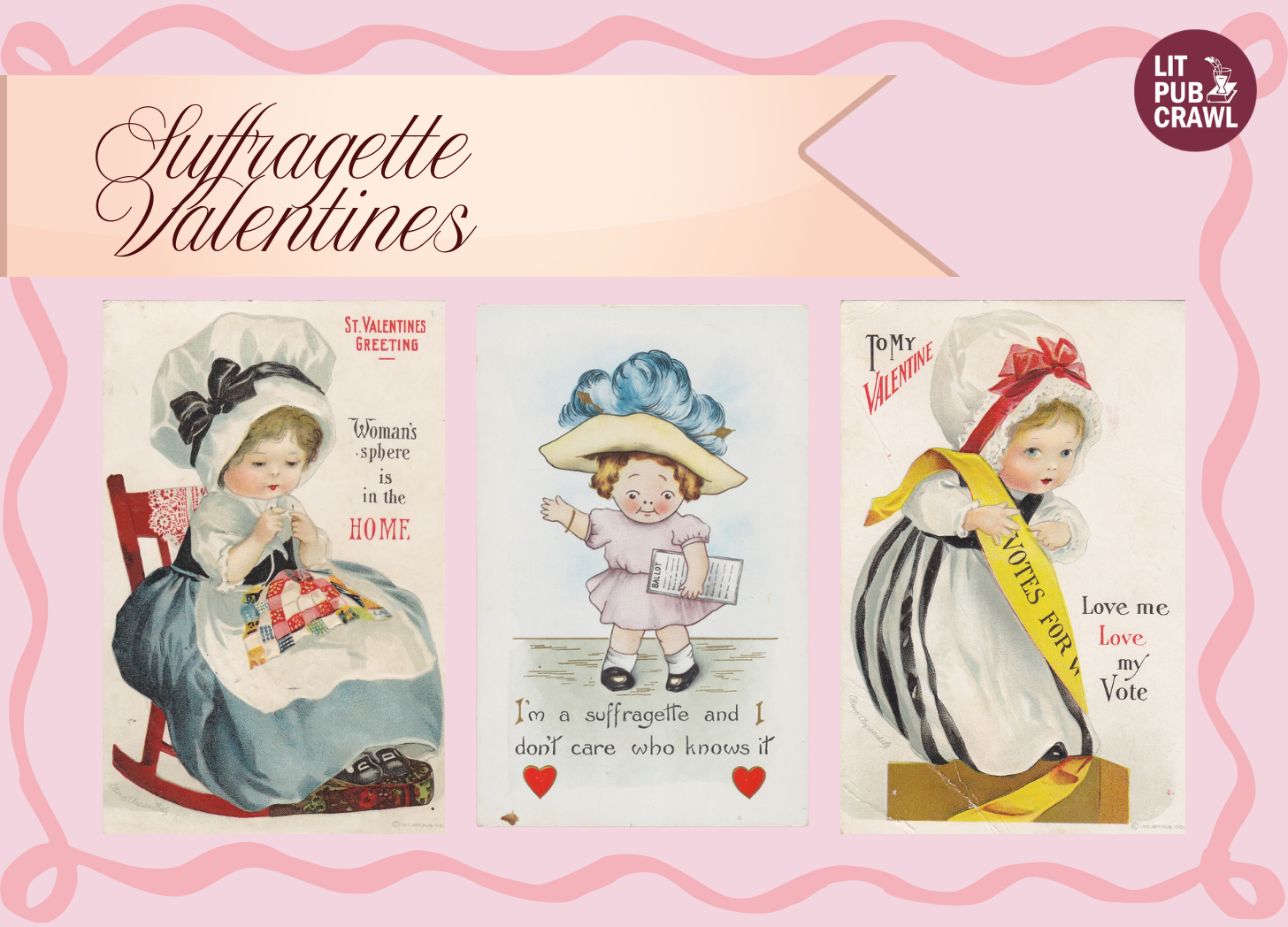
Suffragette Valentines were explicitly political, with some mocking women demanding the vote, others satirizing the men threatened by them.
On February 14th, 1851, Elizabeth Cady Stanton received perhaps the most swoon-worthy valentine of all: her husband Henry Stanton presented two petitions to the New York State Senate calling for women’s voting rights.
Forget chocolate. Give me equal rights.
Vinegar Valentines & Penny Dreadfuls
Of course, not every declaration was so sweet.
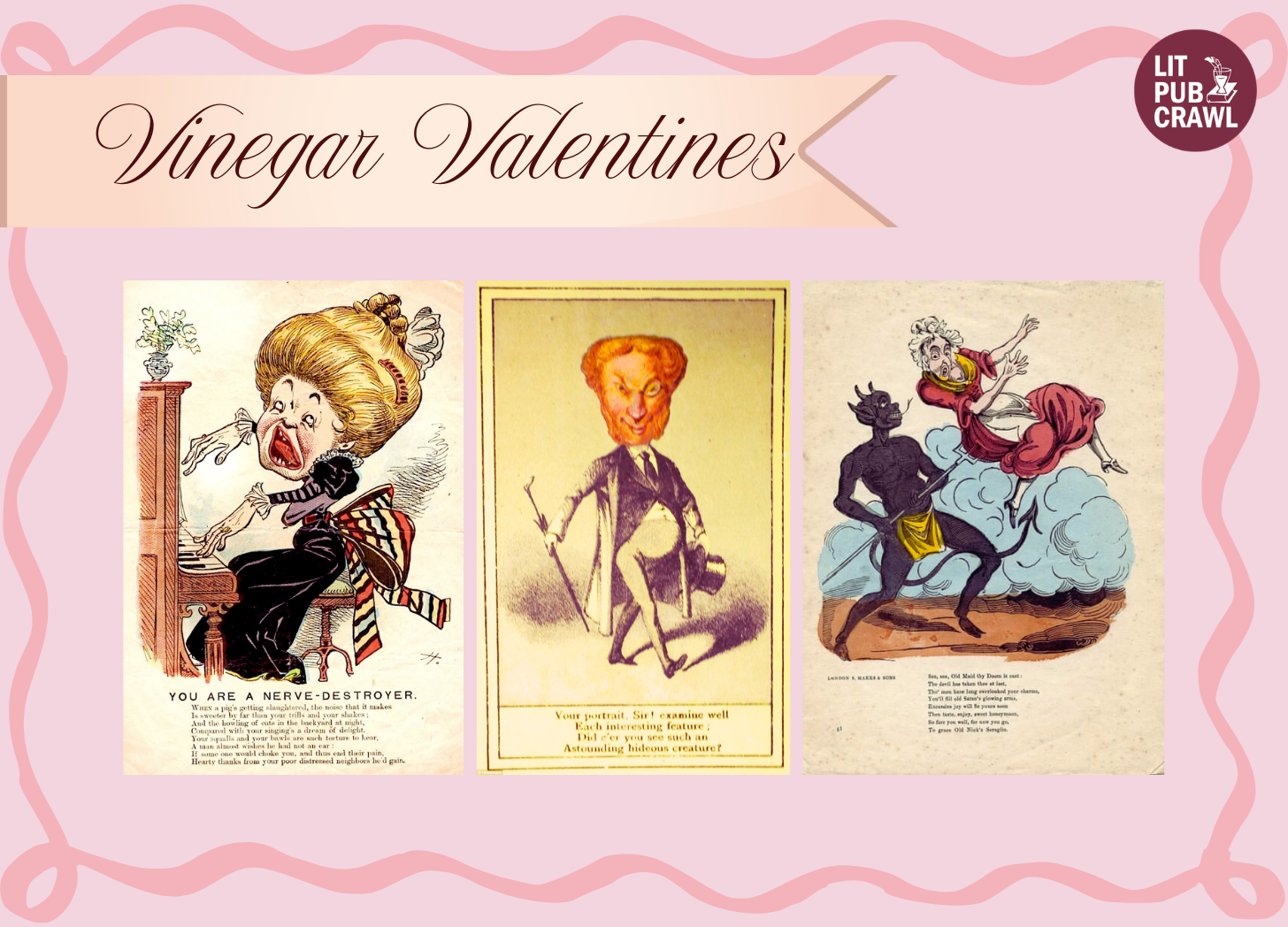
Enter the Vinegar Valentine, also called Penny Dreadfuls.
These were mass-produced insult cards costing a single penny. They ridiculed their recipients mercilessly. At the turn of the 20th century, the Chicago post office reportedly withheld 25,000 of them for being too inappropriate to deliver!
What’s worse is that when they first appeared, recipients had to pay postage upon delivery. Imagine retrieving your mail, giddy with anticipation, only to finance your own humiliation.
Some Victorian cards even featured morbid elements — including small taxidermied birds attached to the paper. Love and mortality were, for them, constant companions.
And Then, Something Simply Sweet
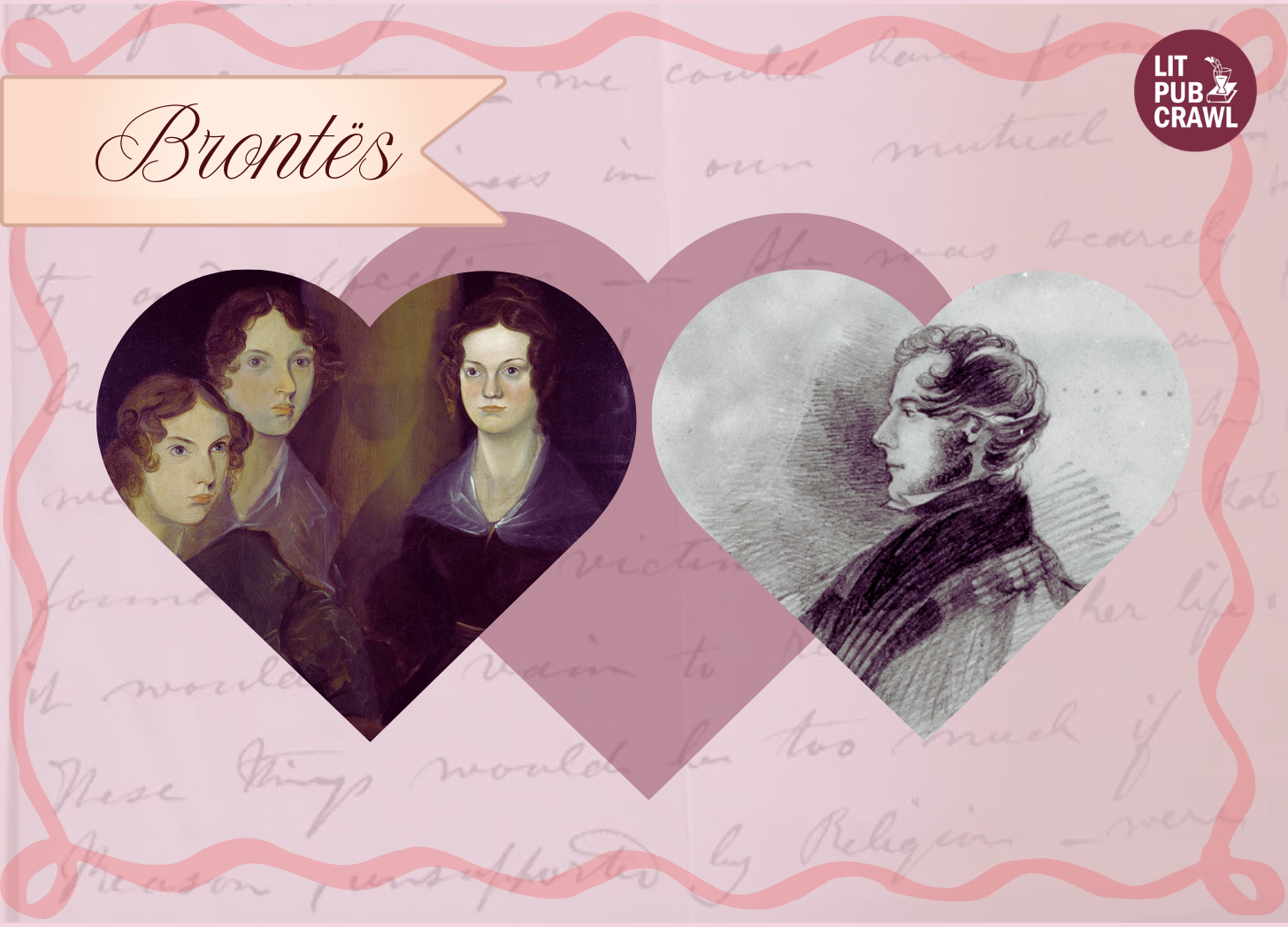
Speaking of death-obsessed love… Charlotte, Emily, and Anne Brontë, authors of epic works such as Wuthering Heights and Jane Eyre, led notoriously poor and sheltered lives.
In 1840, William Weightman — their father’s curate — learned that the sisters (ages ~24, 22, and 20 at this time) had never received a Valentine. So he sent each one an anonymous card, walking nearly ten miles to mail them from different towns so his identity would remain hidden.
Charlotte eventually caught on and replied with a poem titled A Rowland for Your Oliver, thanking him.
We cannot write or talk like you;
We’re plain folks every one;
You’ve played a clever jest on us,
We thank you for your fun.
It is, perhaps, the most tender version of the holiday — not commercial, not political, not cruel. Just really sweet.
In true form Charlotte, after sending her valentine to her friend, Ellen Nussey, cheekily wrote:
“Have you lit your pipe with Mr. Weightman’s valentine?”
It is, perhaps, the most tender version of the holiday — not commercial, not political, not cruel. Just really sweet.
At the end of the day, celebrate however you like (or not at all)!
But I do appreciate the reminder offered in an 1847 New York Herald article describing Valentine’s Day as “an admirable way for bashful young men to make tender declarations”:
Be kind. Be generous. And you will sleep all the more sweetly.
Which, in a world of saints, suffragettes, and vinegar-soaked insults, feels like a radical act of love. One we could use more of.
If you enjoyed this dive into the strange literary undercurrents of familiar holidays, consider subscribing — there’s far more lace (and menace) where this came from.
Happy Valentine’s Day!